Artist


Mirdidingkingathi Juwarnda Sally Gabori (c.1924 - 2015)
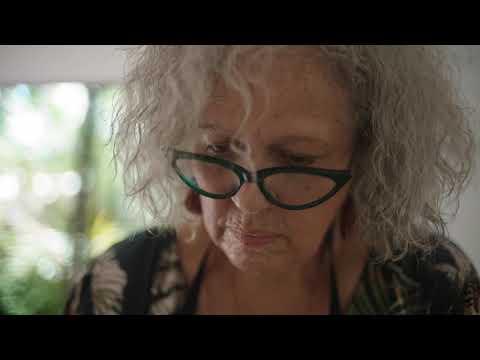
The incomparable Mirdidingkingathi Juwarnda Sally Gabori (c.1924 - 2015) was a distinguished senior Kaiadilt woman and a contemporary artist of considerable sophistication whose short yet incredible career left an astonishing cultural legacy.
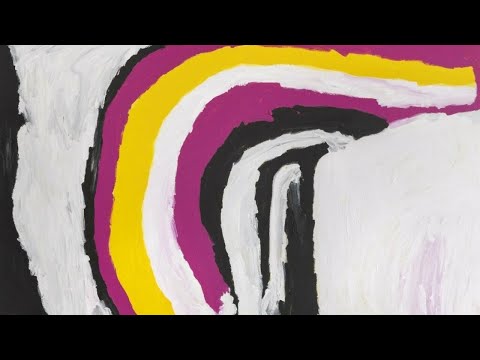
Sally Gabori began to paint in 2005, at around eighty years of age, and was immediately recognised as an artist of breath-taking instinct, unabashed passion and drive. Her signature expressive brushstrokes and vivid use of colour brilliantly portray places on Bentinck Island of deep personal significance to the artist including Dibirdibi, her husband’s Country; Thundi, her father’s Country; Mirdidingki, her own Country; and, the first outstation on Bentinck Island, Nyinyilki.
While abstract in nature, Sally Gabori’s depictions of Country retain representational elements which map the landscapes of Bentinck Island, and Gabori’s own identity, across her monumental canvases. Her indefatigable zeal to communicate her stories, knowledge, and experiences through her painterly interpretations of Country won her great admiration both nationally and internationally and impart a real and intimate sense of who Sally Gabori was and where she was from.
Prior to 1948, Sally Gabori and her family lived on Bentinck Island in accordance with Kaiadilt custom, with minimal interaction or influences from European colonisation, until the entire Kaiadilt population was forced to migrate to Mornington Island following a series of environmental disasters. In the 1980s the Kaiadilt people began to re-establish themselves on their ancestral lands on Bentinck Island, however the Mornington Island community remained the major resource centre for Sally Gabori and her contemporaries.
Following her passing in 2015, Sally Gabori’s tremendous legacy and immense oeuvre were honoured in a major retrospective exhibition 'Mirdidingkingathi Juwarnda Sally Gabori: Dulka Warngiid – Land of All' at the Queensland Art Gallery | Gallery of Modern Art in Brisbane and at the National Gallery of Victoria in Melbourne.
Her work features in important collections and major institutions in Australia and abroad including the National Gallery of Australia, National Gallery of Victoria, Queensland Art Gallery, Art Gallery of Western Australia, Auckland Art Gallery Toi o Tamaki, New Zealand the Musée du Quai Branly, France, the Museum of Contemporary Aboriginal Art, the Netherlands and the ARTIZON Museum (formerly Bridgestone Museum of Art), Tokyo, Japan, and her works continue to be exhibited in New Zealand, the United Kingdom, USA, South Korea, the Netherlands and Italy.
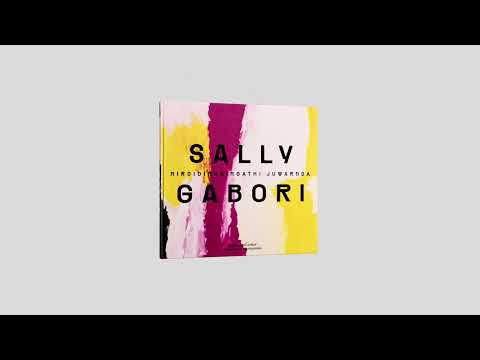
In 2022 Gabori was honoured with a major solo survey exhibition at the distinguished Fondation Cartier pour l’art contemporain in Paris, France. To coincide with this significant exhibition of paintings, Fondation Cartier, in close collaboration with Gabori’s family and the Kaiadilt community, published a comprehensive Exhibition Catalogue and online archive dedicated to the life and work of the artist, the most exhaustive archive ever compiled on the history of Gabori and the Kaiadilt people. In 2023, the internationally acclaimed survey exhibition shown by the distinguished Fondation Cartier pour l’art contemporain in Paris travelled to Milan, Italy for the prestigious Triennale di Milano.
A century after her birth, Sally Gabori’s oeuvre continues to inspire. In 2025 the National Gallery of Victoria, Melbourne, and the Cairns Art Gallery, Queensland, presented solo exhibitions in the artist's honour, and her work featured in national exhibitions across Australia. Internationally, her work featured at the ARTIZON Museum, Tokyo, in Echoes Unveiled: Art by First Nations Women from Australia, in the touring exhibition The Stars We Do Not See: Australian Indigenous Art (presented across the USA, Canada and Australia from 2025 to 2027), and in the major exhibition Elles. Contemporary Australian Indigenous Women Artists at the Musée Rath, Geneva.
Mirdidingkingathi Juwarnda Sally Gabori continues to be recognised as one of Australia’s most influential and important contemporary artists. A master of composition and colour, her practice was deeply transformative to the national and international perception and appreciation of Australian landscape painting and Australian First Nations art – her oeuvre forever altering Australian contemporary art.
© The Estate of the Artist and Alcaston Gallery, Melbourne
For an extended CV, please contact Alcaston Gallery at art@alcastongallery.com.au